
一項在不丹境內開展的全面分析,旨在識別、量化並繪製白腹鷺及其相關鳥類物種面臨的各種威脅。

不丹極度瀕危白腹鷺及相關水鳥所面臨的威脅研究和分析
(English version follows)
白腹鷺(Ardea insignis)目前是極度瀕危的鳥類之一,全球族群數量估計不到60隻。作為喜馬拉雅淡水生態系統健康狀況的重要指標物種,如今僅分佈於不丹、印度和緬甸的部分地區。不丹可找到全球約50%的白腹鷺族群,是該物種生存的重要棲地。
2024-25香港觀鳥會亞洲自然保育基金資助的「不丹極度瀕危白腹鷺及相關水鳥所面臨的威脅研究和分析」於2025年完成。研究由不丹皇家自然保護協會(RSPN)進行,在不丹境內開展一項全面的威脅分析,旨在識別、量化並繪製白腹鷺及其相關水鳥物種面臨的各種威脅。透過對曼德丘河Mangdechhu和普納桑楚河Punatsangchhu流域進行系統性研究,為緊急保護干預措施提供規劃建議。
根據世界自然保護聯盟(IUCN)框架,研究結果將威脅分為三個層級,其中「住宅和商業開發」以及「生物資源利用」是最普遍的一級威脅。研究結果揭示了兩個流域均遭受著巨大的人類活動壓力,非法捕撈是最常見的威脅之一,其次是沙石疏浚和基礎設施建設造成的棲息地破碎化。初步結果顯示,不丹境內的旺杜波德朗地區Wangduephodrang被認定為風險最高區域,紀錄了近一半的三級威脅。研究結果顯示制訂保護策略迫在眉睫,包括合法的棲息地保護、更嚴格地執行工業項目的環境法規以及深入的社區參與。
保護白腹鷺、鳥類、更甚是生態環境,需要各方面的努力和協調,否則白腹鷺將面臨不可逆轉的滅絕風險。
支持亞洲自然保育基金:https://cms.hkbws.org.hk/donation/tw/
Mapping and Quantifying Multiple Threats to the Critically Endangered White-bellied Heron and associated waterbird species in Bhutan
The White-bellied Heron (Ardea insignis) is among the world’s most critically endangered bird species, with a global population estimated at fewer than 60 individuals. As an important indicator of the health of Himalayan freshwater ecosystems, it is now confined to limited areas in Bhutan, India, and Myanmar. Bhutan supports about 50% of the global population, making it a key habitat for the species’ survival.
Funded by 2024-25 HKBWS Asia Conservation Fund, the project “Mapping and Quantifying Multiple Threats to the Critically Endangered White-bellied Heron and associated waterbird species in Bhutan” was completed. Conducted by the Royal Society for Protection of Nature (RSPN), the study carried out a comprehensive threat analysis in Bhutan to identify, quantify, and map various threats faced by the White-bellied Heron and related waterbird species. Through a systematic study along the Mangdechhu and Punatsangchhu river basins, this analysis sought to provide a roadmap for urgent conservation intervention.
The results categorize threats into 3 hierarchical levels based on the IUCN framework, identifying “Residential and Commercial Development” and “Biological Resource Use” as the most pervasive Category I threats. The findings revealed strong human pressures across both river basins, with illegal fishing emerging as the most frequent specific disturbance, followed by sand and stone dredging and habitat fragmentation caused by infrastructure development. Preliminary results showed that the Wangduephodrang district of Bhutan was identified as the highest-risk area, recording nearly half of the Category III threats. The severity of these findings indicates an immediate need for a multi-faceted conservation strategy that encompasses legal habitat protection, stricter enforcement of environmental regulations for industrial projects, and deep-rooted community engagement. Without a coordinated effort to mitigate these documented pressures, the White-bellied Heron faces a high risk of irreversible extinction.
Protecting the White-bellied Heron, other bird species, and indeed the broader ecosystem requires coordinated effort across all sectors— support us: https://cms.hkbws.org.hk/donation/tw/
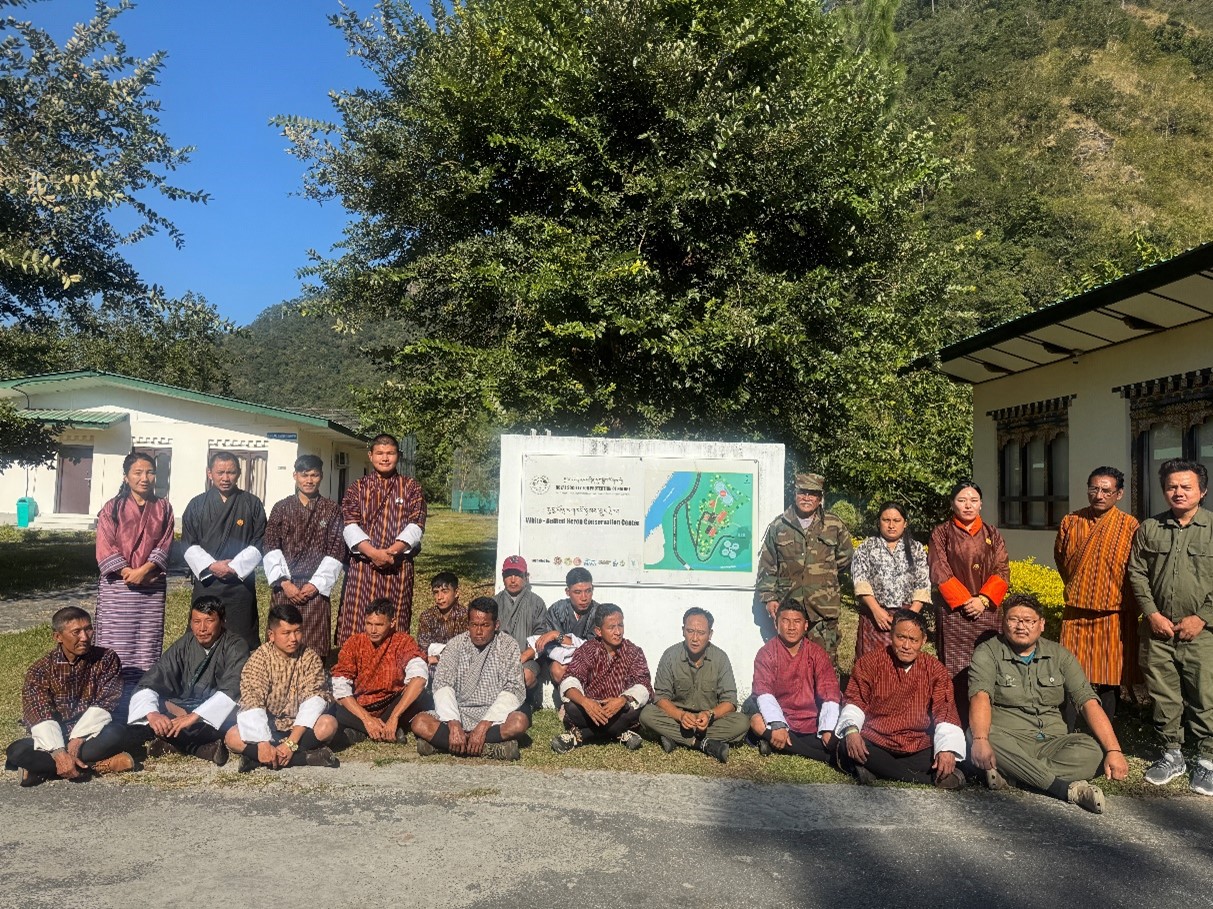
Knowledge sharing workshop conducted for community people
團隊在社區舉辦分享會,介紹白腹鷺保育

The survey team in the field were documenting threats
調查團隊攀山涉水記錄潛在威脅
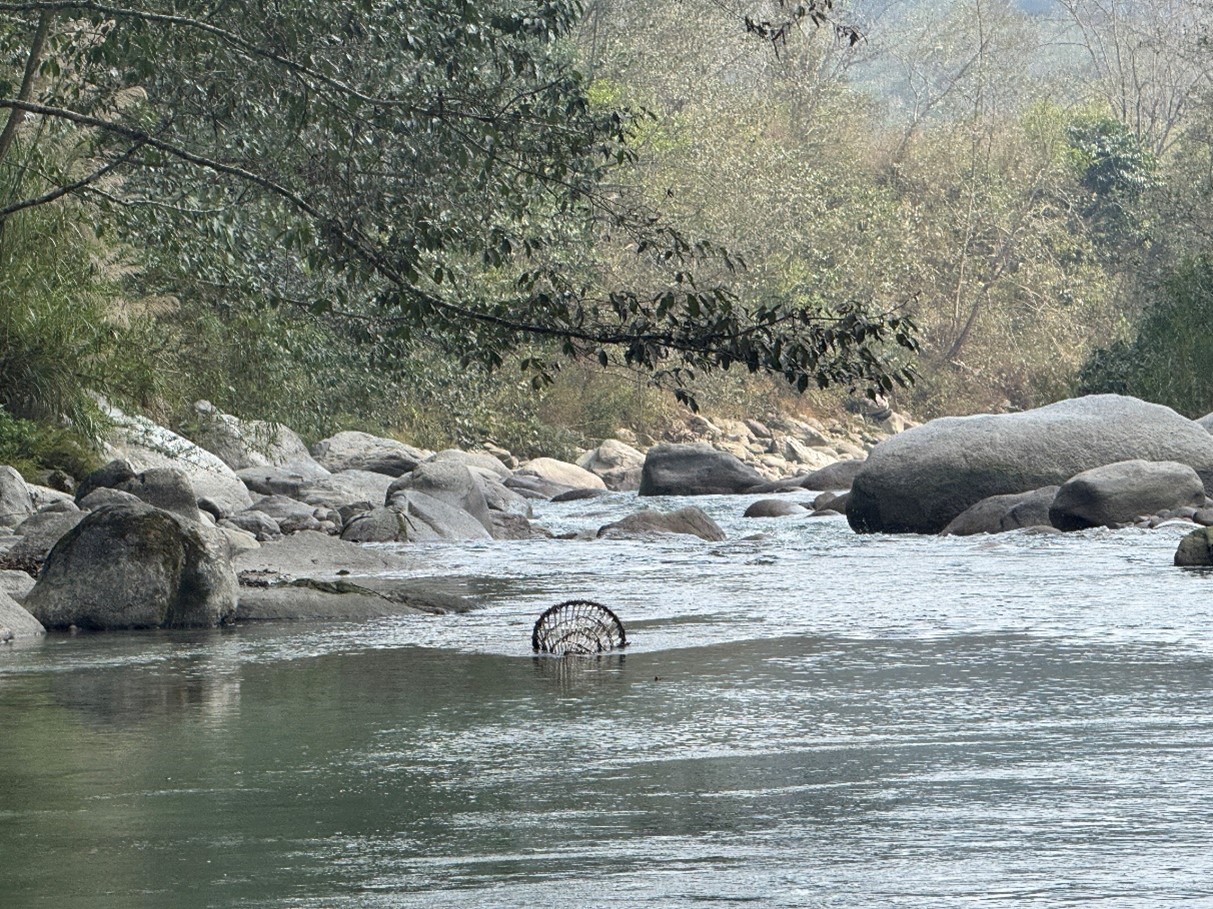
Illegal fishing trap set in the river.
團隊在河中找到非法捕漁網